

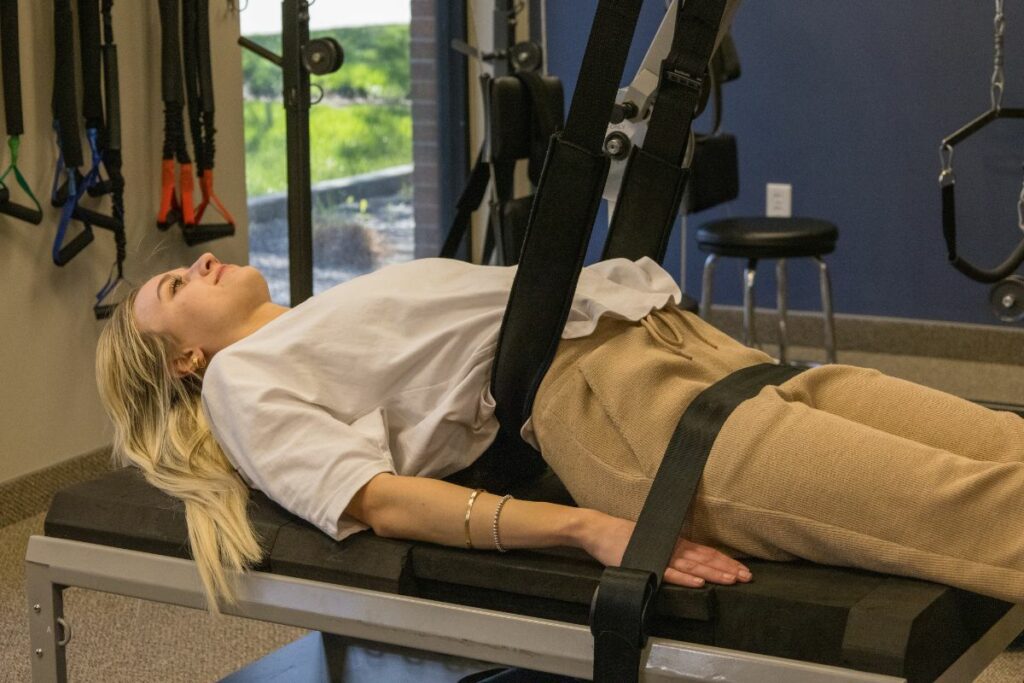
04 Jun Kinetic Decompression: Top Spinal Decompression Exercises
Biomechanical Exercises for Restoring Intervertebral Disc Height
Feeling that stiffness in your back? It might be time to think about how we can help your spine get back to its best. We’re talking about exercises that gently work to create a little more space between your spinal discs. This isn’t about harsh movements; it’s about using your body’s own mechanics to encourage better disc health and maybe even help you feel taller and more comfortable. Let’s explore how some simple movements can make a big difference for your spine.
Key Takeaways
- Spinal decompression exercises involve gentle stretching to create space between the vertebrae, potentially improving disc height and reducing pain.
- Movement plays a big role in keeping spinal discs healthy by allowing them to receive nutrients and stay hydrated.
- A biomechanical approach focuses on using natural body movements to support and restore spinal health.
- Combining gentle traction, core strengthening, and flexibility drills can form the basis of a good spinal decompression routine.
- Consistency is key, and it’s always wise to check with a healthcare professional before starting any new exercise program, especially if you have existing pain.
Understanding Spinal Decompression Exercises
What Are Spinal Decompression Exercises?
Spinal decompression exercises are a set of movements and techniques designed to create space between the vertebrae in your spine. Think of it like gently stretching out a compressed spring. The main idea behind how to decompress your spine is to reduce the pressure on your intervertebral discs, which are the shock absorbers between your spinal bones. When these discs get compressed over time due to gravity, poor posture, or injury, they can bulge, herniate, or simply lose their height and cushioning ability. Decompression aims to reverse this by creating a slight vacuum effect, which can help draw nutrients into the disc and potentially reduce pain caused by nerve irritation.
Benefits of Spinal Decompression Exercises
So, why bother with these exercises? Well, the benefits can be pretty significant for many people. Primarily, they help alleviate pain, especially the kind that shoots down your legs (sciatica) or makes simple movements feel impossible. By reducing pressure on nerves, you can find relief from that nagging ache. Another big plus is the potential to restore disc height. Over time, discs can get squashed, and decompression can help them plump back up a bit, improving spinal alignment and function. This can lead to better posture and a greater range of motion. Plus, it’s a non-invasive way to approach back issues, often avoiding the need for more drastic measures.
Here’s a quick rundown:
- Pain Relief: Reduces pressure on nerves and discs.
- Disc Health: Encourages nutrient flow and can help restore disc height.
- Improved Mobility: Increases space between vertebrae, allowing for better movement.
- Posture Correction: Can help realign the spine and reduce slouching.
Who Can Benefit from Spinal Decompression Exercises?
Lots of people can find relief with spinal decompression exercises, but it’s not a one-size-fits-all solution. If you’re dealing with chronic lower back pain, bulging or herniated discs, sciatica, or even just general stiffness from sitting too much, these exercises might be a good fit. People who have jobs requiring prolonged sitting or standing, or those who have experienced minor injuries, often see improvements. However, it’s super important to note that if you have certain conditions like severe osteoporosis, spinal stenosis, or have had recent spinal surgery, you should definitely check with a doctor or physical therapist first. They can help determine if decompression is safe and appropriate for your specific situation.
It’s always a good idea to get a professional opinion before starting any new exercise program, especially when dealing with back pain. A healthcare provider can assess your condition and guide you toward the most effective and safest exercises for your body.
Foundational Principles of Kinetic Decompression
When we talk about kinetic decompression, we’re really getting into the nitty-gritty of how movement itself can help your spine. It’s not just about passively stretching; it’s about using your body’s own mechanics to create space and reduce pressure on those sensitive intervertebral discs. Think of it as active rehabilitation, where you’re an essential part of the healing process.
The Role of Movement in Disc Health
Our intervertebral discs are pretty amazing structures. They act like shock absorbers for your spine, and they need hydration and movement to stay healthy. When we sit for too long or don’t move enough, these discs can become compressed and lose their vital fluids. This is where kinetic decompression comes in. By introducing specific movements, we encourage fluid exchange within the discs, which is like giving them a much-needed drink.
- Encourages nutrient and fluid exchange: Movement helps pump nutrients and water into the disc.
- Reduces stiffness: Regular motion keeps the surrounding muscles and ligaments flexible.
- Improves circulation: Better blood flow means more oxygen and nutrients reach the spinal structures.
Restoring Intervertebral Disc Height
Over time, due to gravity, poor posture, or injury, the space between your vertebrae can decrease. This compression can lead to pain and reduced function. Kinetic decompression exercises aim to gently reverse this process. By applying controlled traction and movement, we can create a slight separation between the vertebrae, allowing the discs to rehydrate and potentially regain some of their lost height. This subtle increase in space can significantly relieve pressure on nerves and surrounding tissues.
Biomechanical Approach to Spinal Health
This isn’t just about random exercises; it’s a thoughtful approach based on how your body works. We look at the spine as a complex system of bones, muscles, and joints, and how they all interact. Kinetic decompression uses exercises that leverage your body’s own biomechanics to achieve spinal decompression. It’s about understanding the forces at play and using them to your advantage, rather than fighting against them.
The goal is to retrain your body to move in ways that support spinal health, reducing the cumulative stress that can lead to disc issues over time. It’s a proactive strategy for long-term well-being.
This approach often involves:
- Assessment: Understanding your specific spinal mechanics and areas of restriction.
- Targeted Movement: Using exercises that directly address those restrictions.
- Active Participation: Empowering you to be an active participant in your recovery and maintenance.
Key Spinal Decompression Exercises
When we talk about spinal decompression exercises, we’re really looking at ways to gently create space between your vertebrae. This can help take pressure off your spinal discs and nerves. It’s not about forceful pulling, but more about controlled movements that encourage your spine to lengthen. Think of it as giving your discs a little breathing room.
Gentle Traction Techniques
These are exercises designed to create a mild pulling sensation along your spine. They aim to decompress the discs without any harshness. The goal is to encourage fluid exchange within the discs, which is vital for their health and height.
- Inversion Table Hangs: Using an inversion table, you hang upside down or at an angle. This uses gravity to gently stretch your spine. Start with short durations and a less steep angle if you’re new to this.
- Pelvic Tilts: Lie on your back with knees bent. Gently flatten your lower back against the floor by tightening your abdominal muscles and tilting your pelvis upward. Hold for a few seconds, then relax. This engages your core while creating a subtle decompression effect.
- Knee-to-Chest Stretch: Lie on your back and bring one knee towards your chest, holding it gently. You should feel a stretch in your lower back and hip. Hold for 20-30 seconds, then switch legs. Doing this with both knees can also be effective.
Core Strengthening for Spinal Support
A strong core is like a natural brace for your spine. When your core muscles are strong, they help support your vertebrae and reduce the load on your discs. This makes your spine more stable and less prone to issues.
- Plank: Hold a push-up position, but rest on your forearms instead of your hands. Keep your body in a straight line from head to heels. Engage your core and glutes. Aim to hold for 30 seconds to a minute, gradually increasing the time.
- Bird-Dog: Start on your hands and knees. Extend one arm straight forward and the opposite leg straight back, keeping your back flat and core engaged. Hold for a few seconds, then return to the starting position and switch sides.
- Dead Bug: Lie on your back with your arms extended towards the ceiling and knees bent at a 90-degree angle. Slowly lower one arm back behind your head and the opposite leg towards the floor, keeping your lower back pressed into the mat. Return to the start and switch sides.
Flexibility and Mobility Drills
Improving flexibility and mobility around your spine allows for better movement and can reduce stiffness that might contribute to disc compression. These drills help your spine move through its natural range of motion.
- Cat-Cow Stretch: Start on your hands and knees. As you inhale, drop your belly and arch your back, looking up (Cow pose). As you exhale, round your spine towards the ceiling, tucking your chin to your chest (Cat pose). Move slowly and fluidly between the two poses.
- Spinal Twists (Supine): Lie on your back with knees bent and feet flat on the floor. Let your knees fall gently to one side, keeping your shoulders on the ground. Hold for a few breaths, then repeat on the other side.
- Child’s Pose: Kneel on the floor and sit back on your heels. Fold your torso forward, resting your forehead on the floor and extending your arms forward or alongside your body. This is a great resting pose that gently stretches the spine.
Remember, consistency is key with any exercise program. Listen to your body and don’t push through sharp pain. These spinal decompression exercises are meant to be gentle and supportive.
Integrating Spinal Decompression into Your Routine
So, you’ve learned about kinetic decompression and some exercises that can help. That’s great! But how do you actually make this a regular part of your life? It’s not just about doing a few stretches once in a while; it’s about building a consistent habit that supports your spine long-term. Think of it like any other fitness goal – you wouldn’t expect to run a marathon after one jog, right? Your spine needs that same dedication.
Creating a Personalized Exercise Plan
First off, nobody’s spine is exactly the same, and what works wonders for one person might not be the best fit for another. That’s why a one-size-fits-all approach just doesn’t cut it. You need a plan that’s tailored to you. This means considering your current fitness level, any specific pain points you have, and what your daily life looks like. Are you sitting at a desk all day? Do you have a physically demanding job? These details matter.
Here’s a simple way to start thinking about your plan:
- Assess your current situation: Honestly, where are you starting from? Note down any pain, stiffness, or limitations you experience. Also, think about your daily activities and how they might be affecting your spine.
- Set realistic goals: What do you want to achieve? Maybe it’s simply reducing morning stiffness, being able to stand for longer periods, or improving your posture. Small, achievable goals are key.
- Choose your exercises: Based on what you’ve learned and your assessment, pick a few exercises from the “Key Spinal Decompression Exercises” section that feel right for you. Start with the gentler ones.
- Schedule it in: This is a big one. Look at your week and find specific times for your exercises. Treat these appointments with yourself as seriously as you would a doctor’s visit.
Consistency and Progression
This is where the real magic happens. Doing your exercises consistently is far more important than doing a super intense workout sporadically. Aim for regularity, even if it’s just for 10-15 minutes a day to start. You’re building a foundation, and that takes time and repetition. As you get more comfortable and notice improvements, you can gradually increase the duration, frequency, or intensity of your exercises. Maybe you start with holding a stretch for 20 seconds and work your way up to 30 or 45 seconds. Or perhaps you add an extra set of core exercises. The idea is to keep challenging your body just enough to promote adaptation without causing strain. This steady progression is how you truly learn how to decompress spine effectively over time.
Remember, consistency is your best friend when it comes to spinal health. Small, regular efforts add up to significant long-term benefits. Don’t get discouraged if you miss a day; just get back on track the next.
When to Seek Professional Guidance
While many people can successfully integrate kinetic decompression exercises into their lives with good results, there are times when getting help from a professional is the smartest move. If you’re experiencing severe or persistent pain, numbness, or tingling, it’s definitely time to consult a doctor or a physical therapist. They can properly diagnose the cause of your symptoms and rule out any serious underlying conditions. Also, if you’re unsure about how to perform certain exercises correctly, or if you’re not seeing the progress you expect, a professional can provide personalized guidance and adjust your plan. They can also help you understand how to decompress spine safely and effectively within the context of your specific health situation. Sometimes, a professional assessment can prevent you from doing more harm than good.
Advanced Techniques and Therapies
Mechanical Diagnosis and Therapy (MDT)
Mechanical Diagnosis and Therapy, often called the McKenzie Method, is a structured way to figure out what’s causing your back or neck pain and how to fix it. It’s not just about passive treatments; it really pushes for you to get involved in your own recovery. The main idea is to classify your problem based on how it responds to specific movements and positions. This helps pinpoint whether your issue is directional, needs stabilization, or requires something else entirely. The goal is to empower you with exercises you can do yourself to manage and even eliminate your symptoms. It often means fewer visits and less reliance on passive therapies.
Here’s a quick look at how MDT works:
- Assessment: A detailed evaluation focusing on your responses to repeated movements and sustained postures.
- Classification: Grouping your condition into a specific syndrome (derangement, dysfunction, or postural syndrome) to guide treatment.
- Treatment: Prescribing specific exercises and movements tailored to your classification to centralize and reduce pain.
- Prevention: Educating you on how to manage your condition and prevent future flare-ups.
MDT aims to provide a clear diagnosis and a clear treatment plan, often leading to rapid symptom improvement and a greater sense of control over your spinal health. It’s about understanding your body’s mechanics and using that knowledge to your advantage.
Chiropractic Spinal Manipulation
Chiropractic spinal manipulation, sometimes called an adjustment, is a hands-on technique used to improve the function of your spine and nervous system. Chiropractors use their hands or specialized instruments to apply controlled force to specific joints in the spine. The idea is to restore proper movement and alignment, which can help reduce pain and improve overall body function. It’s a common part of chiropractic care and can be quite effective for various musculoskeletal issues. Some chiropractors use tools like the Activator Adjusting Instrument, which delivers a quick, gentle impulse to the spine.
Therapeutic Modalities for Pain Relief
Beyond direct manipulation and movement-based therapies, a range of other treatments can help manage pain and support healing. These are often used alongside other approaches to provide more complete relief. Think of them as complementary tools in your recovery toolbox.
- Therapeutic Ultrasound: Uses sound waves to create heat in deeper tissues, helping to reduce inflammation and promote healing in muscles and tendons.
- Cold Laser Therapy (Low-Level Laser Therapy): Employs specific wavelengths of light to stimulate cellular repair and reduce inflammation without generating heat.
- Shockwave Therapy: Applies acoustic pressure waves to injured areas to break down scar tissue and encourage the body’s natural healing processes.
- Massage Therapy: Focuses on soft tissues to relieve muscle tension, improve circulation, and reduce stress, which can indirectly benefit spinal health.
These therapies can be really helpful for addressing pain and inflammation, making it easier to engage in the active exercises needed for long-term recovery. They’re part of a broader strategy to get you feeling better and moving more freely.
Frequently Asked Questions
What exactly is spinal decompression?
Spinal decompression is a way to gently stretch your spine. Think of it like pulling apart two connected things to give them more space. This is often done using special equipment to help ease back or leg pain by relieving pressure.
How do exercises help make my spine taller?
Some exercises can help create a little more space between the bones in your spine, called vertebrae. This space is where the soft discs are located. When these discs get squeezed over time, they can lose some of their height. Certain movements can help gently pull apart the vertebrae, allowing the discs to rehydrate and regain some of their natural height, which can reduce pain.
Are these exercises safe for everyone?
While these exercises are generally safe and aim to be gentle, it’s always best to check with a doctor or physical therapist before starting. They can help you figure out if these exercises are right for you and show you how to do them correctly to avoid any problems.
What kind of exercises are involved?
The exercises usually involve gentle stretching and movements that create a slight pulling apart of the spine. This can include specific traction techniques, exercises to strengthen your core muscles (which support your spine), and movements to improve flexibility and how easily you can move.
How often should I do these exercises?
Consistency is key! Doing these exercises regularly, as recommended by your healthcare provider, is more important than doing them intensely just once in a while. A good plan usually involves doing them a few times a week, but your specific routine might be different.
Can these exercises completely fix a herniated disc?
These exercises can help reduce pain and improve function, especially for disc issues where pressure is a problem. They can help create space and allow the disc to heal. However, for severe disc problems, other treatments might also be needed. It’s important to discuss your specific condition with a healthcare professional.
- How to Build a Personalized News Feed Without Information Overload
- 5 Best CBD Oils for Dogs to Consider for Pet Wellness in 2026
- Managing Anxiety With Help From a Telehealth Professional
- Benefits of Goal-oriented Therapy for Anxiety and Depression
- Exploring the Role of Psychiatrists in PTSD Situations
Sorry, the comment form is closed at this time.